1 · The president won't read your thesis. Write them a 5-minute summary
First truth nobody tells you: the jury president has no obligation to read your thesis in full. Often they discover it on the day itself, or they've skimmed it. Sometimes the rest of the jury has too.
Instead of hoping it's been read, take the lead. Prepare a one-to-two-page summary, readable in five minutes: the problem you tackled, your method, your three key results, your recommendation. It's not a courtesy, it's strategic. You choose what the jury remembers before they've even heard you. A president who arrives with your summary in mind asks better questions, and asks them on the ground you master.
2 · Your defense is not a summary. It's a sequel
Your thesis froze the moment you handed it in. Your defense happens weeks later. In between, you've kept thinking, the sector may have moved, you've gained perspective. That's exactly what the jury wants to see.
A defense that repeats the written work stops where the document stops. A defense that brings continuity shows movement: what you would do differently today, what you've learned since, where you would take the subject with six more months. You're not defending a document. You're showing you already think beyond it. That's also how you reason when building a strategy: a deliverable is never an end point, it's a base you keep building on.
3 · Master every word you say, or the jury will dig in
Here is the most expensive mistake, and the most frequent one. Out loud, you want to show everything you did, so you scatter. Every topic you throw out is a door you open to the jury.
You slip in "I also optimized the SEO". The jury pounces: "what exactly did you do, and why?". If you can't answer in depth, you've just been cornered on ground you don't master, when nobody had asked you anything. Better three points you own completely than ten you mention in passing. A jury respects mastery, not inventory. Before your defense, reread your presentation and ask yourself, for every claim: could I hold ten minutes on this? If not, cut it.
4 · If you used AI, own it and declare it
My opinion, and it only binds me: there is no shame in having used artificial intelligence in your work. The shame would be hiding it, or not being able to explain what it brought you.
The value is not in the tool, it's in the why and the how. Which method you followed, which tools you used, and your prompts (the instructions you gave the AI) added as an appendix or in your sources for the jury. It's not an admission of weakness, it's proof of methodological maturity. Several Belgian universities no longer leave you the choice anyway: UMONS requires students to declare the use of generative AI in its rules, and the same academic integrity logic is spreading, for instance at UQAM. Hidden AI is a fraud risk. Declared, documented AI is a method. It's exactly what we do ourselves when we document our own AI usage, as in the making-of of our 404 page coded with Claude Code.
5 · Time is graded as much as substance. Rehearse against the clock
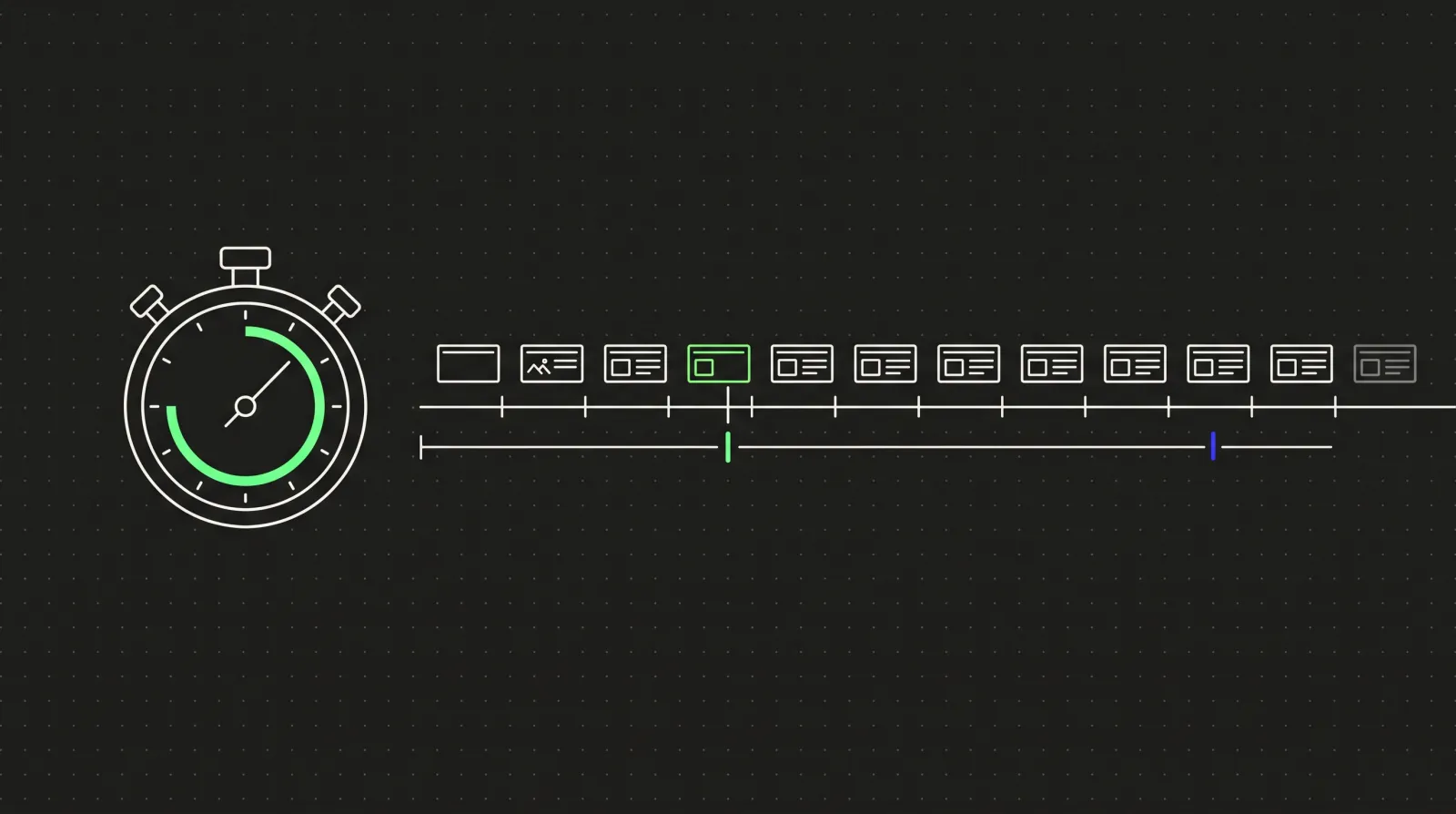
Everyone forgets it: staying within the allotted time is part of the grade. Most defenses run around twenty minutes of presentation (Scribbr), followed by questions.
To stay within it, keep the 10/20/30 rule from Guy Kawasaki in mind: ten slides, twenty minutes, a font of at least thirty points. Ten ideas, no more, because a jury doesn't retain more. A large font forces you to choose your words instead of filling your slides. Above all, rehearse with a stopwatch from your very first run-through, as the ULB guide reminds you. Running over means getting cut off before your conclusion. The jury then doesn't remember your content, it remembers the hole.
6 · Prepare the obvious questions, and get grilled beforehand
Most jury questions are predictable. The limits of your method, the strength of your figures, what you didn't cover: deep down, you already know them. The trap is not preparing them.
Three simple reflexes. Ask your internship supervisor what they would challenge in your work, they know your blind spots better than you do. Rehearse your presentation in front of classmates and ask them to attack. Also ask a former student who faced the same jury what they were asked. The questions that sink a defense are almost never traps, they are obvious questions nobody had prepared a clear answer to.
7 · Show up with a fresh stat nobody has read, and know how to explain it
A recent figure, published after you handed in your thesis, proves one thing: you didn't stop working the day you submitted. That's a strong signal for a jury.
One condition, non-negotiable: a statistic you can't explain is worse than no statistic at all. Know its source, its calculation method, and its limits. The jury will dig, and a number you drop without knowing where it comes from turns against you in three seconds. It's exactly the rigor we apply to tracking and measurement: a figure only has value if you know which part is solid and which part needs nuance.
8 · Show your failures, it's proof that you learn
A student who explains what didn't work impresses more than a student who defends every line. Because explaining a failure is proving you learn. Say what went wrong, the improvement paths you see, and what you've already worked on to fix it. A jury doesn't expect a perfect piece of work, it expects someone lucid about their limits.
9 · Challenge your own written work
Go further still: be the first to criticize your own thesis. Based on skills you've acquired since submission, or a technology that has evolved in the meantime. In e-business as in all things digital, six months are enough to date a recommendation. A "here's what I would do differently today" is worth a thousand defensive justifications. You're not protecting your work, you're showing you keep making it grow.
10 · Close the chapter by opening the door to the next one
A defense is not the end of a piece of work, it's the closing of a chapter. The real final question is not "what did you do", it's "what door are you opening". What can the next student build on? How would someone go further than you did? What do you concretely recommend to the company where you did your internship, now that you know its ground better than anyone? A defense that ends on an opening, not on a summary, proves you already think like a professional. It is, by far, what marks a jury most.