1 · Why a mini-game on a 404 in 2026
The idea isn't new. The Chrome dinosaur 404 page, released in 2014, was created by Sebastien Gabriel, Alan Bettes and Edward Jung as an easter egg on the "you-are-offline" page. Internal project codename: Project Bolan, in tribute to Marc Bolan of the band T. Rex. Today, the Chrome dino counts 270 million games played every month worldwide (Wikipedia Dinosaur Game, Google Chrome blog).
The market has since turned advergaming into a serious category. The in-game advertising market is worth 131 billion dollars in 2026, with a projection to 217 billion in 2031 (Technavio). Gaming captures 2.5 times more attention than classic social or web ads. In-game ads generate 2 times more purchase intent than passive ads. 90 to 95% of Gen Z and Gen Alpha identify as gamers (eMarketer 2026).
What changed in 2026 isn't the trend. It's the technical accessibility. Before, an advergame required a dedicated game design team and a premium budget. With Claude Code, the engine can be briefed in a few hours. With Suno V5, the soundtrack comes out in a few prompts. With ElevenLabs via MCP, custom voices replace professional VO services.
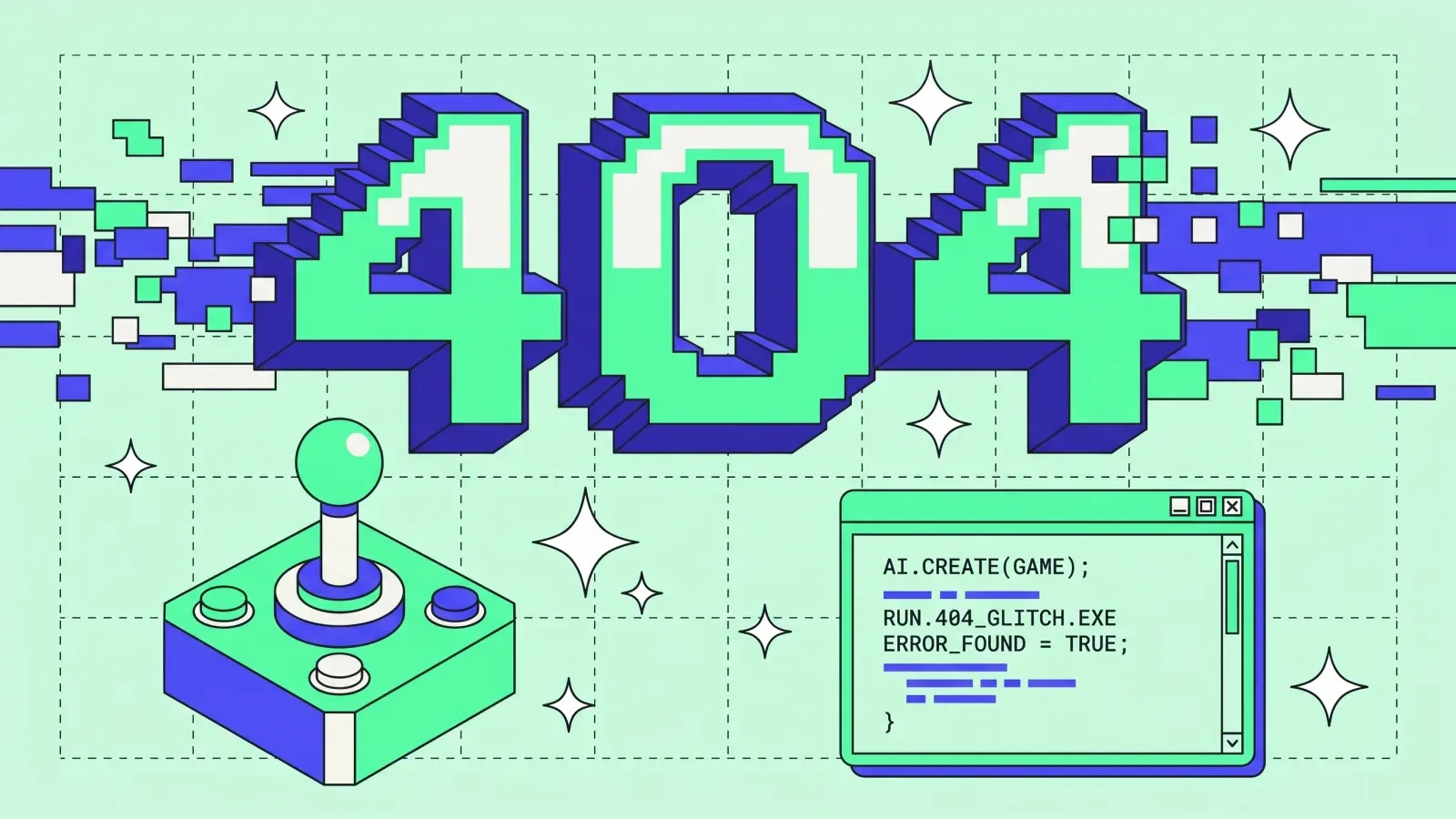
It's in that context that we decided to turn our agency 404 page into a mini-game. Not on a whim. As a demonstration that lightweight advergaming has become accessible to SMEs.
2 · The initial brief: top-down shooter, not animated page
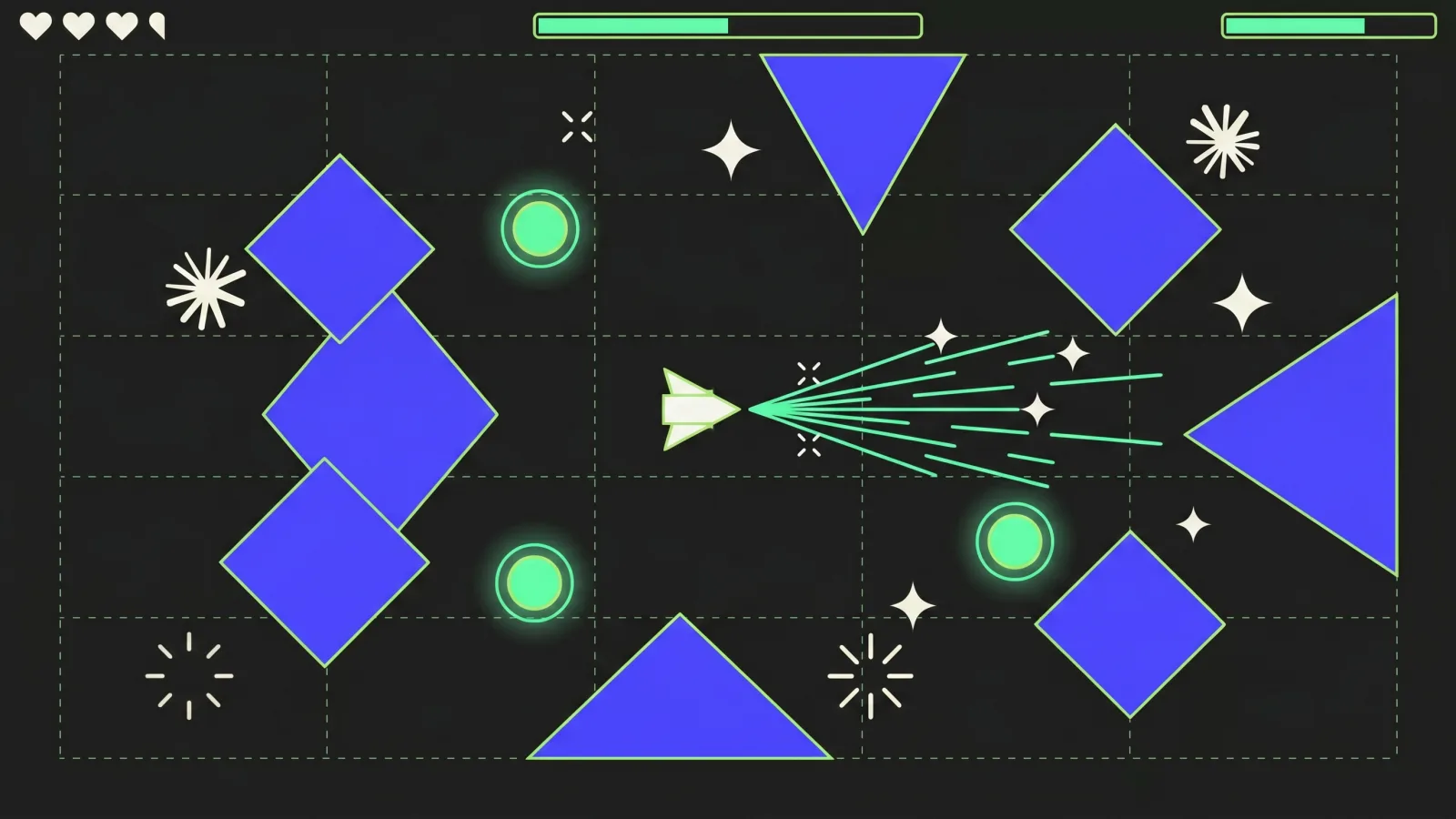
The starting ambition was clear: a shippable top-down shooter with a boss and a leaderboard. Not a simple stylish 404 animation. Not a minimalist Flappy Bird. A real few-minute mini-game with progression, narrative voices, adaptive music.
The core scope held. What got layered on during the sprint:
- 6 pickups mapped to the 6 HeySquad services (tracking, server-side, consent, ROAS, automation, organic SEO). Not by accident: each pickup unlocks a skill mapped to a service. Brand coherence without a frontal sales pitch.
- Production leaderboard with an automatically tagged Mailchimp submission. The game became a lead entry point, not just a demo.
- 2 custom narrative voices generated via ElevenLabs Voice Lab: a male military commander and a female coach with a Birmingham accent. Technical details in §4.
- A two-headed musical universe : French hyperpop at 140 BPM for the gameplay phase, frenchcore at 200 BPM for the boss fight. A nod to the Belgian electronic scene.
- Full mobile controls : multi-touch virtual joystick, 6 skill buttons, hold-to-charge laser. The game runs on a smartphone as cleanly as on desktop.
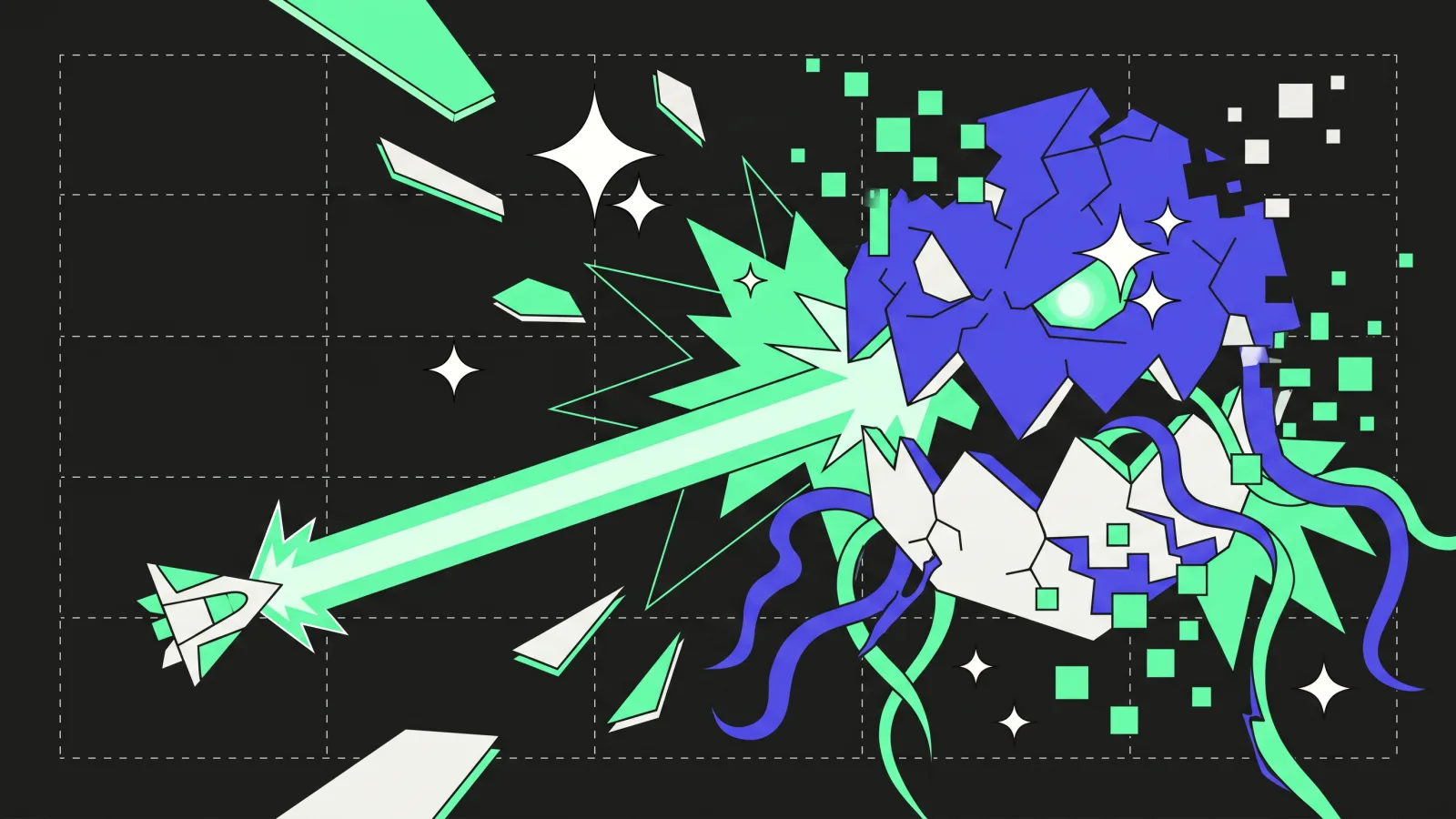
- A menacing SSR-CRASH-404 boss with an enraged phase 2 at 50% HP. Not a decorative punching bag.
« We started with a contained scope. We finished with a leaderboard, custom voices, adaptive music and mobile controls. That's the scope creep we couldn't bring ourselves to refuse. »
3 · 7 hours total, 0 lines of code written by hand, 100% prompt engineering
The time math fits on three lines:
- 5h of dev (~46 Claude Code iterations between V3.24.119 and V3.24.164)
- 1h of internal testing
- 1h of gamer community feedback (minor mobile adjustments)
No line of code written by hand. The workflow: brief Claude Code in French, generate the code, review live, iterate immediately. Once the PixiJS engine was in place, I layered on through successive briefs: "add a boss that spawns after 6 pickups", "generate an audio queue with HIGH/MID/LOW priority", "refactor the mobile controls into a virtual joystick + 6 skill buttons".
GSAP handled the intro and end screen transitions (skill `gsap-core` + cascade entrance animation). Howler.js for audio management. PixiJS v8 for the rendering engine, with WebGPU (the modern browser graphics API) as progressive enhancement and a WebGL fallback for older devices.
The only thing Claude Code didn't do for me: the art direction. The aesthetic choice, the military/squad tone, the naming "OPÉRATION RÉCUPÉRATION · BRAVO-404", the operator briefing in an OPS dossier format, the alignment of 6 pickups onto 6 services. That's brand work I have to provide. The rest is rigorous prompt engineering.
4 · Creative AI stack: Suno V5 for music, ElevenLabs MCP for voices
This is the most differentiating part of the sprint. The prompts below are the verbatim prompts used. Reusable as-is by any SME that wants its own advergame.
Suno V5 music
The art direction honors the Belgian electronic heritage. Belgium plays a pioneering role in worldwide electronic music: EBM (Electronic Body Music) with Front 242 in Brussels in 1981 (Wikipedia Front 242), then New Beat in the 90s, a typically Belgian movement documented in The Sound Of Belgium. For the game's 2026 choices, we stuck with contemporary DJ genres: hyperpop for the gameplay phase, frenchcore for the boss.
Why French hyperpop rather than a generic arcade synthwave? Because the genre carries the message as much as the gameplay does. Hyperpop is the most saturated, fastest, most "too much" sound of 2026: pitched vocals, overflowing synths, teenage-on-adrenaline energy. Exactly the register of a brand easter egg that owns not taking itself seriously. The boss frenchcore pushes the cursor further (distorted kick, 200 BPM) so the gameplay-to-boss switch is felt in the body before it is understood. The choice is not cosmetic: it extends the Belgian electronic heritage cited above while speaking the sonic language of the generation that plays. An advergame is recognised by its soundtrack as much as by its engine, and that signature becomes a reusable asset (social, teasers, loading screens) far beyond the 404 page.
Suno V5 prompt, phase 1 gameplay (140 BPM) :
French hyper-pop game anthem at a brisk 140 BPM with syncopated synth stabs, punchy kick-snare, and elastic basslines built for shooter gameplay loops. Intro starts with a tiny glitch motif; the main loop arrives with bright lead hooks and tight arps, mid-section strips to drums plus a pulsing bass drone for boss tension, then the final pass adds stacked synth layers and bigger sidechain lift. Clean lead edges, crisp vocal-chop-style accents as ear candy, neon-bright and high-energy mix with arcade polish, chanson, hyper pop.
Suno V5 prompt, phase 2 boss (200 BPM) :
frenchcore, 200 bpm, distorted offbeat kick, high-tempo hardcore techno, aggressive synthesizer melodies, euphoric drop, fast paced, high energy, syncopated synth stabs, tight arpeggiated synths, pitched vocal chops, elastic 808 sub-bass, pulsing bass drone, stacked synth layers, glitch motif intro, sidechain lift, neon-bright mix, stereo widening, crisp transient compression, sparse explosive drops, boss battle climax. 5 sec intro go straight into the drop.
The BPM ramp from 140 to 200 between phases is in itself a narrative signal. The boss tension isn't built by sound design alone. It's built by the BPM math itself. Crossfade handled on the code side via Howler.js at the boss spawn.
ElevenLabs voices via MCP Voice Lab
ElevenLabs Voice Lab lets you generate custom voices from a descriptive prompt, without cloning a real voice. The MCP integration on the Claude Code side makes generation iterative.
Male military voice prompt (13 combat voice clips: "let's roll", "target down", "boss incoming", "extraction complete", etc.) :
A deep, booming male voice of a massive directive military in his middle years. Thick, gravelly tone with a resonant, theatrical quality that's both menacing and absurdly silly. Speaking at a quick, excited pace with erratic bursts of maniacal energy. Perfect audio quality. Dynamic for gamers motivation.
Female Birmingham coach voice prompt (10 support voice clips: "keep going", "focus", "almost", "clutch", "hype", each mood in 2 variants) :
A dynamic young adult female voice, mid-20s to early 30s, english native speaker with a clean Birmingham accent talking through a talkie-walkie.
The audio queue priority is handled on the code side: HIGH (boss + finale) suppresses MID 600ms + LOW 1200ms · MID (combat) suppresses LOW 800ms. Anti-cacophony without writing a custom audio engine.
The game voices
Two custom voices (ElevenLabs): the military operator and the coach who pushes you. Listen:
5 · 1 hour of testing, minor mobile feedback
Internal testing done with a small gamer community. The feedback didn't bring any big pivot: minor adjustments on mobile (joystick sensitivity, skill button size, multi-touch handling on the iPad Pro that wasn't being detected correctly as a touch device).
At 7h total dev on an internal marketing project, the ROI of heavy user testing quickly passes the point of diminishing returns. We preferred to ship, observe in production, iterate if needed. The 404 stays a brand asset, not a flagship product.

6 · GA4 and Mailchimp tagging plan: the 404 as lead architecture
The mini-game wasn't coded for pure fun. The tagging plan was in scope from the start.
GA4 dataLayer events (7 `page_404_*` events + 2 audio consent events) :
- `page_404_view` : page mount
- `page_404_game_start` : user clicks "play" after the audio consent modal
- `page_404_pickup` : pickup collected (1 of the 6 HS services)
- `page_404_boss_kill` : SSR-CRASH-404 boss defeated
- `page_404_win` : full victory (extraction)
- `page_404_kia` : player death
- `page_404_replay` : replay click after KIA or win
- `404_audio_enable` / `404_audio_skip` : inline audio consent choice
Automatic Mailchimp tags set after the leaderboard submission (with consent) :
- `404` : base tag, automatic segment on the Mailchimp side
- `LEADERBOARD_404`
- `404_pickups_N` : N between 0 and 6 (dynamic by performance)
- `404_boss_killed` : if applicable
Source field: "404 OPÉRATION RÉCUPÉRATION, Xs, N/6 pickups". The sales rep can then see whether the lead comes from a player who killed the boss or from a quick game over. The sales qualification is in the tag.
Too early to give the lead numbers generated (the 404 game has been live since May 2026, we're observing). The architecture is in place, the first leads are coming up in Mailchimp in the dedicated segment.
7 · What we DON'T know how to do, and why we recommend Epic Agency
Radical honesty is part of the HeySquad voice. We're not game designers. Our 404 game is an accessible demonstration, not a production-scale advergame.
What we don't master:
- Rigorous game design : progressive level design, scientific balancing, coherent multi-act narrative
- Advanced gaming WCAG accessibility : we did `prefers-reduced-motion`, but not a full audit by an expert
- Native multi-platform : iOS, Android, console. We stay web HTML5.
- Scaling to millions of players : not the same infrastructure as a Roblox or Fortnite advergame
For a premium advergame, we recommend Epic Agency without reservation. Reference: Red Bull Racers, 12 million players worldwide. Full methodology: strategy, game design workshop, multi-platform development, analytics integration, continuous optimization. Pricing not public, premium signal.
To prove this has become accessible to SMEs via prompt engineering, us. The positioning difference isn't a battle, it's a market complement.
8 · What this makes possible for your SME in 2026
If you're an SME CEO or a marketing manager reading this article, here's what changes for you.
You're no longer forced to pay 15 to 30 k€ for a brand easter egg that pays off in authority. The Claude Code + Suno V5 + ElevenLabs stack is accessible. Your senior dev can ship a mini-game for your 404 in a few days of prompt engineering.
The ROI holds on four axes:
- Tech authority : you send a competence signal to your prospects on LinkedIn and during pitches. "Here's what we did for our own 404."
- Dev recruitment : devs like working at companies that do cool stuff. Your easter egg is an employer branding argument.
- Pure brand differentiation : 99% of SMEs have a generic 404. You stand out without paying for a brand campaign.
- Organic conversation : LinkedIn, Twitter, word of mouth among agencies. Your 404 becomes a conversation thread.
Honest anti-fit : if you're aiming for a production-scale advergame (millions of players, multi-platform, in-game monetization), you don't have the right tool here. Go to Epic.