1 · What the bachelor actually teaches you, year by year
I hear more and more often that a bachelor is useless, that everything can be learned on YouTube or Discord. That is wrong, and not for the reasons you would think.
The first year does not teach you digital marketing. It installs a logic. How to approach numbers through statistics, how to approach technology inside a company, how to approach marketing. Three ways of looking at a problem that you do not naturally have at eighteen. If you arrive already mature on the subject, you will find it too easy, the first level of a mobile game downloaded at 11pm after a TikTok ad.
The second year changes register with the YEP project, a real first end-to-end experience. It is fun, it teaches you a lot, and it is also the moment when the whole class looks alike. It is on you to stand out there, more on that below.
The third year brings the internship and the final thesis, and it is by far the best part: theory finally ties into practice.
Out of this bachelor, I had almost nothing to unlearn when I landed on the field. That is the sign the base was sound. What was missing was not wrong theory, it was absent practice.
Four people marked me and I name them because they exist. Nicolas Sacré, in strategy, still a visiting lecturer at HEPL: the one who made me want to put theory into practice instead of reciting it. Damien Jacob, on e-commerce and the legal framework, two subjects he actually practises since he founded the agency Retis. Laurent Bozard, for communication and writing critique, a discipline whose value I measure every single day. Séverine Mélot, for how involved she is in the whole bachelor, and because she is a real resource when the time comes to look for an internship.
A programme is first of all people. The ones who gave me the most drive were passionate, and that is probably why they reached me: I was too. A good teacher does not stop at graduation, by the way. Nicolas Sacré still reviews my work today: our latest study on Liège e-commerce went through his hands, and he challenged it exactly the way he challenged my presentations in 2016.
Hence the most useful piece of advice in this article. One branch of e-business has to appeal to you already, even vaguely. Without that, this programme will do nothing for you. It is too broad to carry someone who wants nothing in particular. It rewards the ones who show up with an obsession, even a young one, even badly put into words.
2 · What the degree gives you, and what it never will
A programme is supposed to bring four things: a method, a vocabulary, a network, legitimacy.
The network, honestly, no. I got very little out of it and I would rather say so than sell a candidate the opposite.
Legitimacy, somewhat. Although mine came from the internship far more than from the degree itself.
What the programme really gave me was doors onto sectors. The right to walk into conversations where, without it, I would not have had the vocabulary to follow.
A lot of doors open ajar. Not one of them gets pushed all the way.
That is the whole sentence of this article. The bachelor puts you in the corridor. It does not choose for you, and it does not push in your place.

3 · The listed careers, and the real doors
HEPL lists six careers on its official page: business analyst, online marketer, UX designer, project manager, webmaster, e-commerce manager. The list is honest, it is simply written in the future tense: two of those titles have aged, and the newest door is not even on it.
"Webmaster" no longer describes a job that stands on its own in 2026, it dissolved into broader roles. "Business analyst" demands a level of data analysis a bachelor does not give you, it is a three-year target, not a graduation one.
Here is the same list seen from the field, with the jobs I have actually seen graduates of this programme hold.
The door | What the bachelor gives you | What you have to add |
|---|---|---|
Online marketer, generalist digital marketing | The vocabulary, the campaign logic | A speciality, otherwise you stay replaceable |
Web or IT project manager, formerly webmaster | An understanding of both worlds | Real technical ground, and a team to steer |
Odoo or ERP administrator | The logic of commercial flows | The certification and hands-on practice |
Technical sales support | The bridge between sales and technology | The sector, the product knowledge |
E-commerce manager, phygital | The basics of the sales funnel | Logistics, margin, stock |
Automation and AI projects | An understanding of what the business needs | The technical side, and it is learned fast |
That last line did not exist when I graduated. Automation and artificial intelligence projects are the new door of these last three years. n8n to orchestrate flows, Claude or ChatGPT for production, MCP bridges to plug a model into your real data.
I was one of the geeks of my class, hi Antoine if you are reading this. Video games, Twitch, YouTube, building PCs and servers by hand, Reddit, and Twitter in its good years. I touched everything without being a developer, and none of it had anything to do with the programme. Now that I have the jargon, the technical build of a campaign and the real stakes of an SME, that door pushes open on its own. It simply asks that you already pushed the others.
On the market, demand is documented. Le Forem counts 144 shortage occupations in Wallonia for 2026, with IT manager entering the list. Agoria puts 14,500 IT positions to fill in the Wallonia-Brussels Federation, potentially 22,000 by 2030. One digital company out of two names the availability of skills as the first brake on its growth.
The doors are open. They just keep asking for more expertise to be walked through.
4 · I chose to open one door, the one that drove me
My internship at MacManiack opened e-commerce for me, and I never really came back out.
What caught me was the complete calculation. The commercial flow from the investment to the sale, the follow-up behind it, the logistics around it. A funnel where every euro is traceable, from click to parcel. The other disciplines appealed to me, that one kept me awake.
Then Jacoby, with Horecashop.net, where I specialised in phygital and drive-to-store: bringing people into a shop when their search started online. Seven thousand product sheets to rework, a million views on YouTube.
Then TRICOBEL, where I deployed all of it, mostly on Espace Mode and its stores. That is where the loop closed between digital and the floor of a real shop.
One door, pushed for ten years. It is not a lack of curiosity, it is a choice of depth. A bachelor is too short to make you a specialist in anything. So you have to decide where to dig.

5 · Rémy pushed another door, from the same programme
Rémy came out of the same bachelor, class of 2018-2021, with distinction. Three years after me, the same school, a different job.
He did his internship at TRICOBEL, in marketing support for Espace Mode. I was there, and I was his manager. So I followed that internship from end to end, which gives me a point of view I would struggle to have otherwise: I saw the same person as an intern, as a colleague, then in my own squad.
In four months he moved up on Meta Ads and Mailchimp, got into analysis, and did what few interns do: he connected field marketing, the shop's, to the digital and e-commerce side.
Those four months turned into four and a half years. Today he runs email automation on Mailchimp, he digs into problems where I reason in profitability matrices, and he still loves the contact point between physical and digital.
He chose another path, just as effective, but above all tied to what actually drives him. Out of the three operational people at HeySquad, two came out of this bachelor.
6 · Seen from the jury, three profiles come back every year
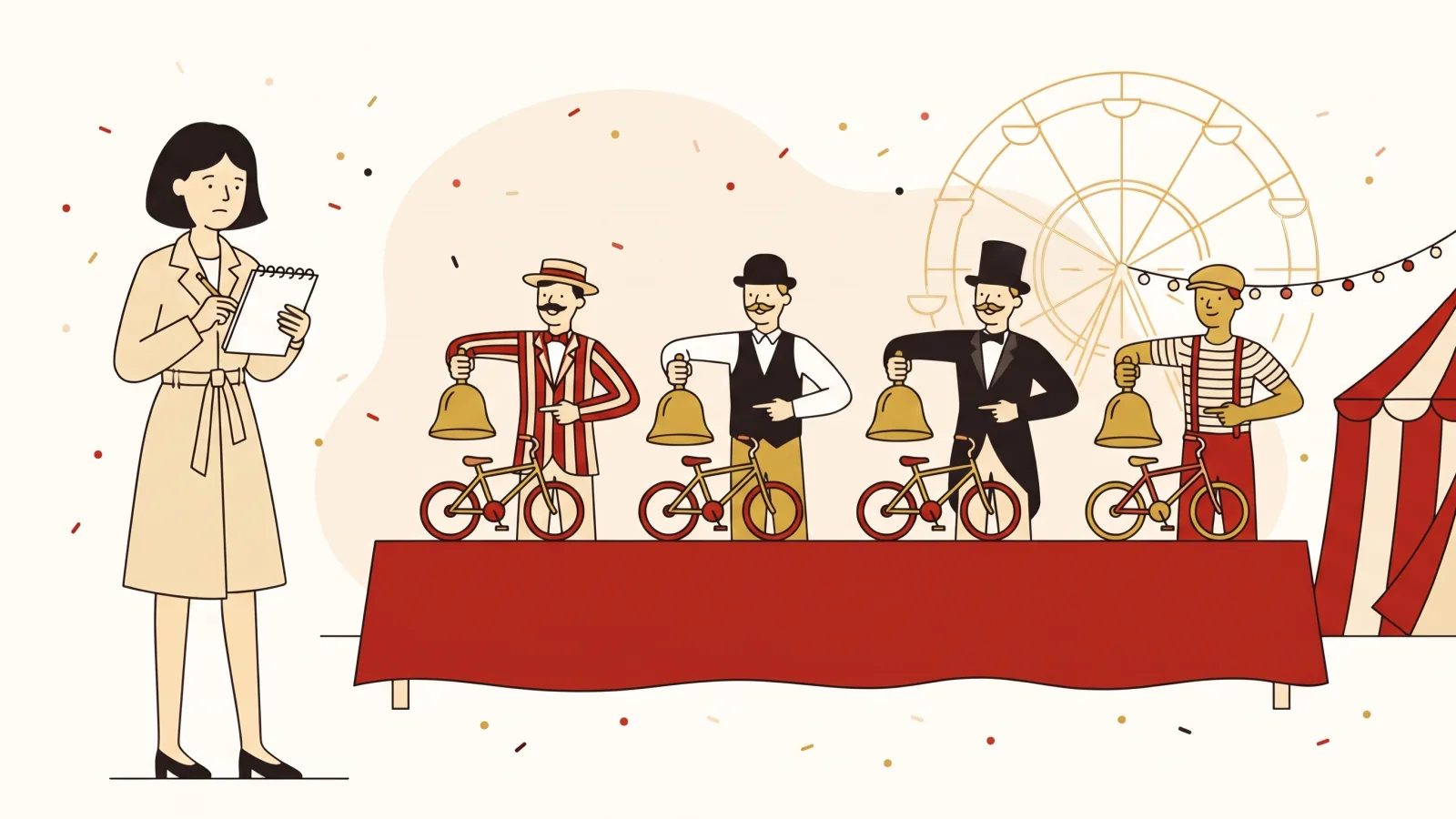
Seen from the president's chair, the room ends up drawing three profiles that keep coming back.
The profile | What happens next |
|---|---|
The one who stopped at the bachelor | Struggles, because they arrive with exactly what everyone else has |
The passionate geek | The best profile by far. Already tinkered, has things to tell |
The one for whom the internship was a revelation | Leaves with a direction, and often with a contract |
I get the signal in the first five minutes. The student who will do fine is the one who understood they are there to go further than their thesis, not to summarise the internship. They raise a business problem and they arrive with first answers. The other one recites.
What has changed since my first year on a jury is artificial intelligence and the mass of resources available online. So we expect more. Above all, we expect an oral command that matches the written work. When a student cannot defend out loud what they wrote, it shows in thirty seconds. Truthfulness has become the criterion.

7 · The one recommendation that will set you apart from your class
What matters most, from the first year: launch a project. Any project. A shop, a site, a channel, a tool. Collect statistics on it. Be curious, challenge yourself, ask questions.
Then, in this order.
- Do not wait for the internship to build. It is the most common mistake, and I see it every year. Students wait until the internship, then panic if no job follows. Apply early, test, start again.
- Pick a branch and dig it. Staying a generalist is comfortable and expensive. The bachelor is too thin to give you a speciality, so take one yourself.
- Prepare your internship well in advance. It is the major choice of the programme and the hardest one. Look for what you can bring to the company, not only what it will bring you. Think of it alongside your thesis.
A word on the YEP project, the business project everyone runs during the programme. The groups that go far, up to the national or European level, get real experience out of it: you do not present a project to that kind of jury without coming out of it stronger.
That said, the experience is shared and compulsory. The whole class lives it. Writing "YEP" on a CV therefore sets you apart from nobody in a pile of applications coming from the same school, and that is where many get it wrong.
My own group won a special jury mention with LaKote, a marketplace for student renters in Liège. The mention is not what counted. It was the project behind it, the one we kept running, and the funding offer that came afterwards.
What sets you apart is never what the programme made you do. It is what you did on top.
8 · The plan I would give the student I was
If you start e-business this year, you are going to get an honest base. It will install a logic, a vocabulary, and a series of doors held ajar onto whole sectors. It will give you neither a network, nor a speciality, nor legitimacy. Those three are earned elsewhere.
The plan holds in three moves.
- Launch something right now, you will get challenged by teachers who work in the field.
- Choose one door instead of watching them all stand ajar, you will be one step ahead of your classmates.
- Prepare your internship as if it were worth a year of classes. Because it is.
If you are looking for a programme that makes you operational without any effort outside class hours, this bachelor will disappoint you. It does not claim that, and it is right not to.
Nine years after my degree, I built HeySquad on that base, plus ten years of field stacked on top. Rémy got here through another door. Neither of us was pushed: we pushed.