1 · This is about marketing, not sales
One clarification first, because the confusion always starts in the same place.
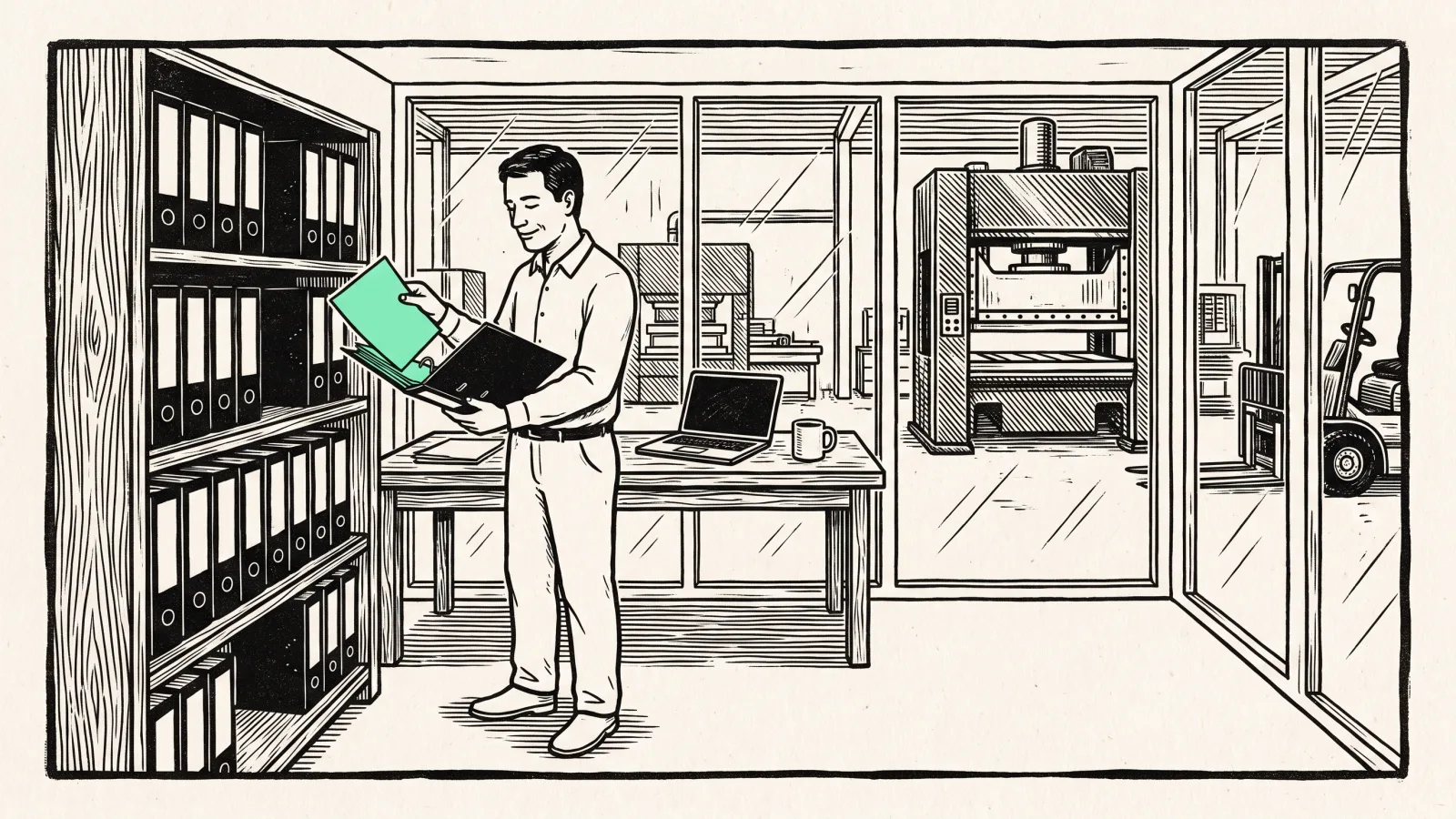
B2B has its own rules, nobody denies that. Thirty or sixty day payment terms, framework contracts, tenders, a procurement team that negotiates line by line, integration and API requirements, those interfaces that let two pieces of software talk to each other, before the first demo even happens. All of it weighs on the sale.
None of it belongs to marketing. Marketing happens before: getting known, getting preferred, getting people to come. When someone claims B2B marketing is different, they are describing the sales cycle, the contract, the invoicing. Then they conclude that advertising, branding and content must adopt the same austere codes. That shift is expensive.
What belongs to sales | What belongs to marketing |
|---|---|
Payment terms, framework contracts | Awareness and memory |
Tenders, requirement documents | Brand preference |
Procurement negotiation | Inbound demand |
Technical integration, APIs, service levels | Content and answers to questions |
So the rest of this only covers one question: how does a professional buyer discover, remember and choose a brand? Their payment terms, they will negotiate with the sales rep.
2 · The cold buyer is a myth
Google ran research with CEB and the Motista institute on the place of emotion in professional purchasing. The result, reported by B2B Marketing: B2B buyers are more emotionally attached to the brands they buy from than B2C buyers are. The study then puts a number on what that attachment is worth. A professional buyer with a strong connection to your brand is five times more likely to consider you, thirteen times more likely to buy, thirty times more likely to pay above market price.
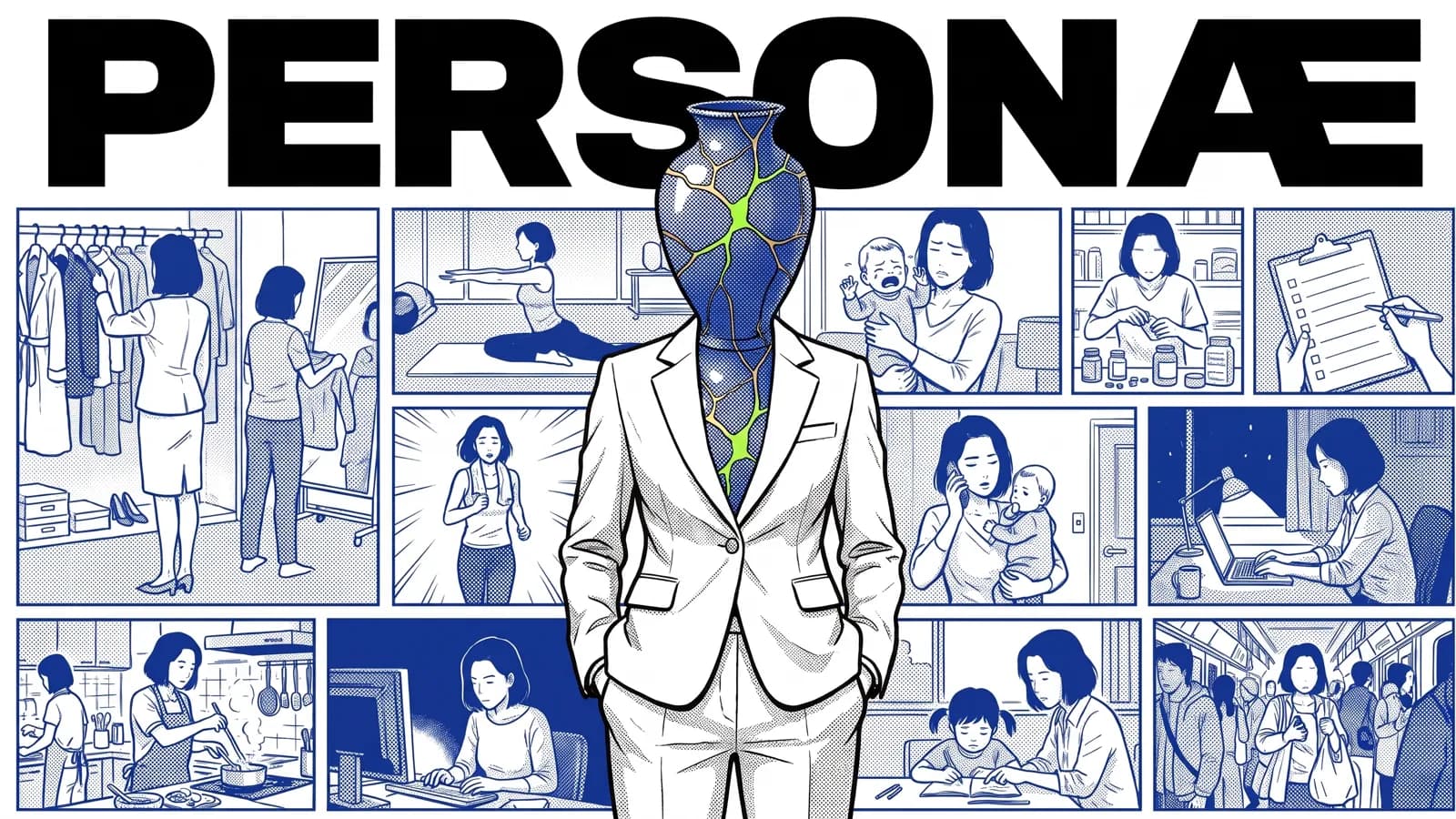
Why? A bad yoghurt costs three euros. A bad supplier costs a budget, a reputation, sometimes a job. The B2B buyer decides with the fear of being wrong, and that fear is an emotion, probably the most powerful of them all.
Does the 60/40 rule ring a bell? Les Binet and Peter Field, two British researchers, combed through the IPA databank, close to 1,500 advertising campaigns and their results, and drew a split from it: 60% of the budget to build the brand, what settles into the market's memory over years, 40% for activation, what triggers a sale now. That was B2C. They ran the exercise again for B2B. Same verdict: brand and activation have to balance out. In their report for LinkedIn's B2B Institute, the optimum they observe sits around 46% for brand and 54% for activation.
Their base is thin and they say so themselves: fewer than fifty B2B cases, drawn from a British advertising effectiveness competition, so campaigns already selected for their results and backed by large budgets. The ratio is not an instruction to paste into an SME's spreadsheet. It says something simpler: a B2B company that puts its entire budget into lead generation is doing half the job.
3 · 95% of your market is not buying today
John Dawes, of the Ehrenberg-Bass Institute, boiled the question down to a rule that has become famous, published in the How B2B Brands Grow report with LinkedIn's B2B Institute. A company changes bank, software or supplier roughly every five years. Over a year, 20% of the market is therefore buying. Over a quarter, 5%. The other 95% will buy later, from the brand that comes to mind that day.
Marketing reduced to lead capture only speaks to those 5%. It harvests what already exists. Eighteen months later, cost per lead climbs and nobody understands why. That is the logic behind putting the majority of the effort on the brand asset side in our three year budget split.
If your plan is three Google Ads campaigns on transactional queries, you are buying the demand that already exists. You are creating none of it. That works to get started, it plateaus fast.
4 · The same human, two situations
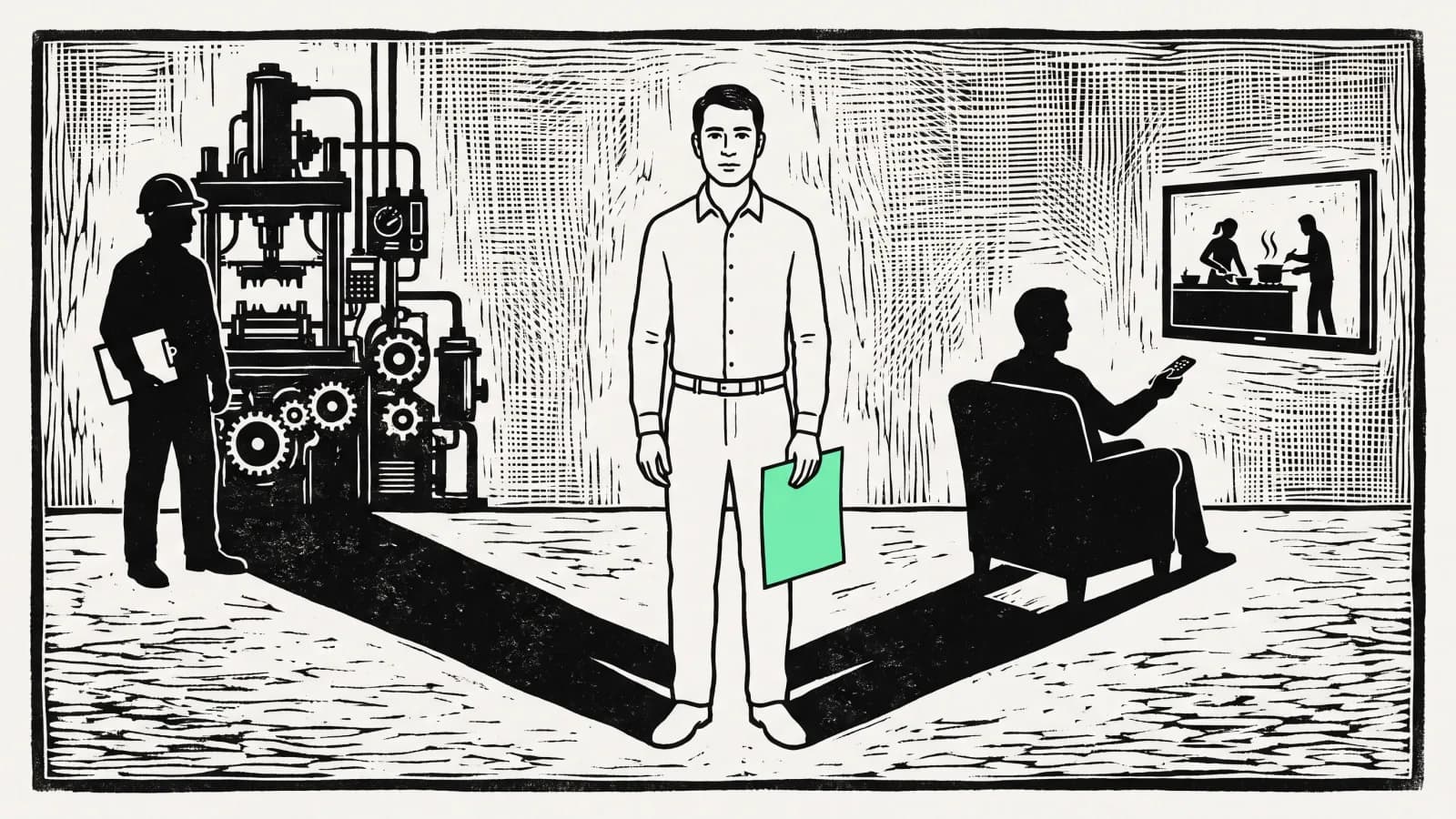
Nicolas selects a metalwork subcontractor at 10 am, then compares solar panel installations for his house at 9 pm. In between, he has not changed brains. Same mental shortcuts, same preference for the brand he already knows, same need to be reassured before signing.
The context is what changes. Is he spending his own money or the company's? Is he deciding alone or does he have to convince three colleagues? Is he risking disappointment or his reputation? Those questions ignore the B2B and B2C divide, and they often turn it upside down.
The real question | Home battery at €15,000 | Business tool at €20/month |
|---|---|---|
Who pays? | The couple, from their savings | The company, from a running budget |
Who decides? | Two people, several quotes | One person, sometimes in five minutes |
What is at risk? | Years of regret | A cancelled subscription |
Cycle length | Several months | One evening |
Hence the H2H label, human to human, which we use at HeySquad as a working lens rather than a slogan. We do not target a legal status, we target a buying situation. That is exactly the approach we describe when we explain how to build a real persona.
5 · Odoo, the Belgian demonstration
Odoo publishes an ERP, the management software that covers a company's accounting, stock, sales and payroll. On paper, the driest B2B you could imagine. Here is what the brand is actually doing this week.
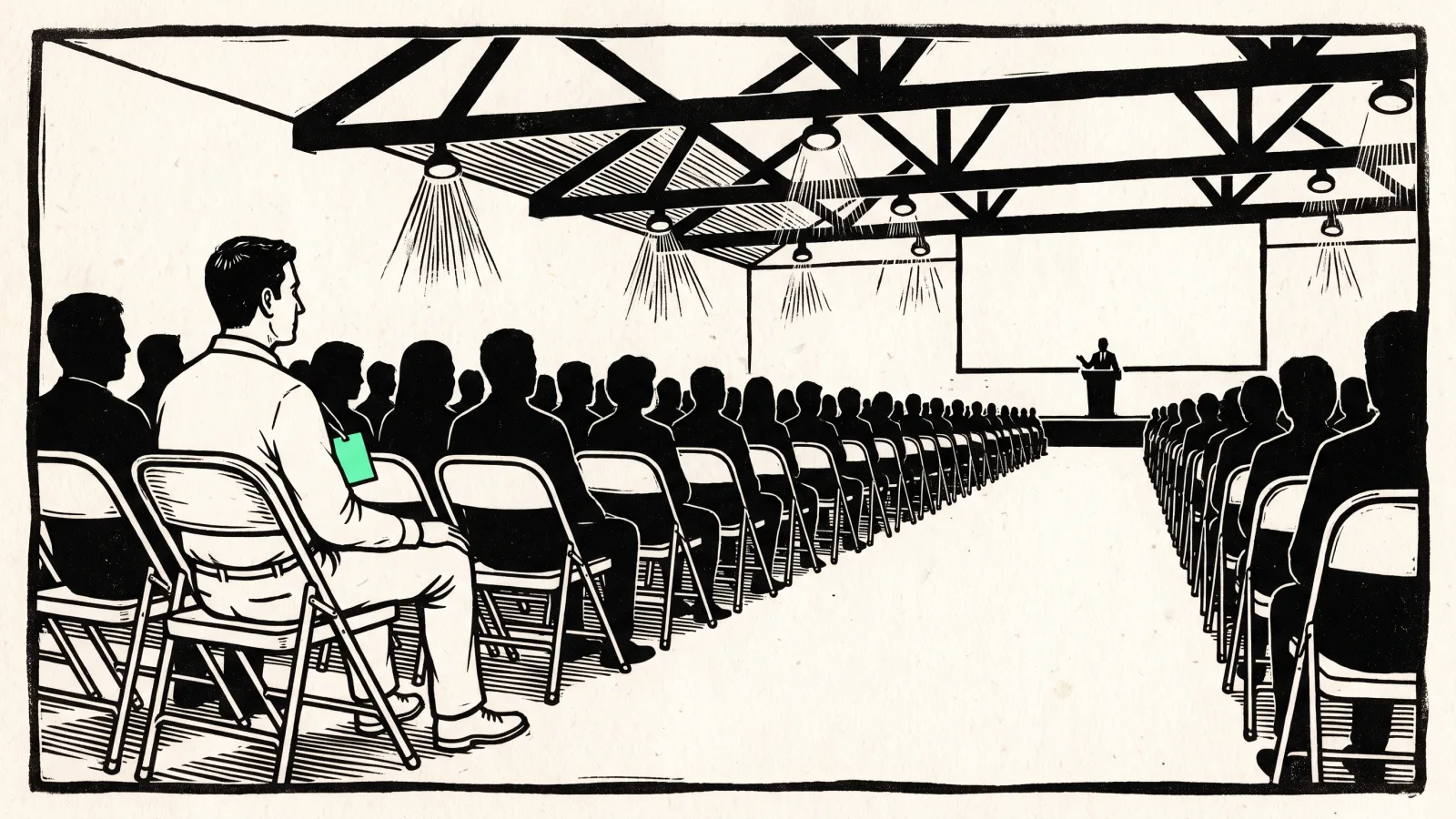
From 24 to 26 September, Odoo Experience 2026 takes over four halls at Brussels Expo. More than 45,000 attendees expected, 150 countries, 400 talks, 400 exhibitors, four concerts, free entry. The launch of Odoo 20 serves as the pretext. On stage: Eden Hazard, Nafissatou Thiam, Cynthia Bolingo, Inoxtag, Micode, Average Rob, HugoDecrypte, GuiHome, alongside the chief executives of Deloitte, Partena Professional and Alan. None of them sells management software. Each one fills a room and a news feed.
The event is only the visible part. Odoo ranks among the most active sponsors on YouTube, all categories included. The two public trackers do not even agree on the volume, which says something about the scale in itself. SponsorRadar counts 399 creators and 1,483 sponsored videos, including one placement detected on 21 September 2026. CreatorDB counts 1,200 and 4,300, for 3.2 billion cumulative views. French-speaking creators sit on both lists: Squeezie for two videos, Amixem for four, McFly et Carlito for one. Odoo pays creators who talk about video games, cooking or science, never about cost accounting. Add outdoor advertising, a YouTube channel run like a media outlet, and permanent test cycles on Google Ads, Meta and LinkedIn.
The McFly et Carlito one says it all. July 2024, thirty-five minutes of cassoulet with Michelin-starred chef Michel Sarran, three million views, and a description that opens with « Découvrez Odoo par ici ». Not one second of management software on screen.
Is this still B2B? Entirely. Odoo sells to companies, invoices companies, trains integration partners. Its terms of sale, its partner contracts and its APIs are as B2B as it gets. Only the marketing surprises, because it borrows the codes of a consumer brand: maximum reach, awareness before consideration, emotion before argument.
The maths holds. Odoo's market is every SME on the planet. Its typical decision maker is an owner who decides alone, or nearly, and who watches Squeezie in the evening like everyone else. Facing a target that broad, fine-grained targeting costs more than it returns. The goal becomes being the brand that comes to mind the day the Excel file gives out. Inoxtag on stage convinces nobody to buy an ERP, he makes sure the name sticks.
6 · Odoo is not alone
If this were a whim of Fabien Pinckaers, we could move on. It is not.
In February, at the Super Bowl, Salesforce handed its spot to MrBeast. An enterprise CRM presented by the biggest YouTuber in the world, with a million dollar puzzle that the Slackbot assistant is supposed to help solve, and whose solution, told by MrBeast in September, still drew 49 million views seven months after the game. In previous years it was Matthew McConaughey. Squarespace was making its twelfth appearance in a row, this time with Emma Stone directed by Yorgos Lanthimos, to sell domain names to freelancers. Workday, a payroll and finance platform, opened the way for B2B brands with Ozzy Osbourne, Joan Jett and Billy Idol in 2023, then Gwen Stefani and Travis Barker in 2024.
Bosch, whose professional tools live in tradespeople's vans, came back in 2026 after a first attempt the year before. Its chief marketing officer points to stronger retail demand and higher awareness from the first year. That is an advertiser statement, not an independent measurement, but signing the cheque again says plenty.
Closer to home, Qonto, the business account for SMEs and freelancers, launched its biggest brand campaign to date in April 2026, rolled out across eight European countries: television, cinema, outdoor, press, podcasts. A B2B fintech buying prime time to tell entrepreneurs that their numbers tell a story. Not one feature table in the spot. Its brand director sums up the shift plainly: the usual discourse sells freedom and passion, it stays silent about the cash flow anxiety at 2 am.
A CRM, a website builder, a payroll platform, power tools, a bank. These brands have little in common, except the essentials. Their market counts millions of SMEs or freelancers. Their decision maker is an identifiable human, an owner, a freelancer or a tradesperson, who watches the Super Bowl or television like anyone else. All of them understood that in a five year buying cycle, the battle is won in memory, not in the comparison table.
7 · Where it really differs: the data
Not everyone has Odoo's or Qonto's market. A manufacturer addressing 300 accounts will not fill Brussels Expo, and has no need to. The real marketing difference between the two worlds sits right there, in the volumes.
Consumer e-commerce | B2B manufacturer | |
|---|---|---|
Conversions per month | Several thousand | Eight |
What the algorithm learns | Fast, almost on its own | Next to nothing |
The actual job | Qualify the signal: margin, basket, new customer | Manufacture signal: signed leads pushed from the CRM |
Account structure | You segment | You consolidate |
A consumer e-commerce site generates thousands of conversions a month. Google Ads and Meta algorithms learn fast, and the work consists of feeding them properly: basket value, margin, new versus returning customer.
That same Walloon manufacturer generates eight leads a month. Algorithms learn nothing from that. The challenge is no longer refining the signal, it is having enough of it. You consolidate campaigns instead of multiplying them. You push signed leads from the CRM back to the platforms, with clean server-side tracking and a connection that holds. You keep your hands on the wheel where automation stays blind. For the brand, the mechanics stay Odoo's, at a smaller scale: occupy your buyers' minds before they start looking. A trade show, a newsletter people actually read, a few pieces of content that carry authority in the niche.
The best investment in a B2B account this year fits in one line: push your signed leads from the CRM back to the platforms. A signed lead is worth ten form fills, provided the algorithm gets to learn it.
8 · The AI answer finishes the job
Whether they are looking for a camper van or a plastic injection subcontractor, buyers now go through ChatGPT or Google's AI Overview, that written answer block shown above the links. They ask their question, read the summary, remember two or three names. Often without clicking.
The B2B query will be more technical, the conversation longer. The reflex stays the same: take the shortest path. For a brand, the stake does not move either, you need to be cited. That takes precise, quantified content, consistent everywhere, plus mentions from somewhere other than your own site. It has become the core of SEO and content work, detailed in our sixteen months of AI Overviews in Belgium.
9 · So should everything be mixed together?
In both directions, no.
On the steering side, an ad account always separates business and consumer campaigns: bids, audiences and budgets have nothing in common. Content grouping follows another logic, the one we described in our article on AndroMeda. You do not group by legal status, you group by problem. "I want to spend less time on my accounting" is the same problem for a freelancer and for a twelve person SME, and a tool like Accountable answers both with the same promise. Personas serve as a cross-cutting view, not as a wall.
On the reasoning side, stop confusing the rules of selling with the rules of marketing. Payment terms, contracts and APIs belong to the first. Awareness, preference and memory belong to the second. The B2B and B2C distinction stays useful as operational segmentation. It becomes harmful as a marketing philosophy, as soon as it justifies communication without brand, without emotion, reduced to demand capture.
At HeySquad, we apply techniques that work on humans. We analyse, we work the data volumes that tell us where to invest, and we sell to people who decide on behalf of a company. Next time someone tells you B2B is rougher, look at who signs the purchase order. It is Nicolas. Then ask yourself whether he is coming to Brussels Expo on Thursday for Eden Hazard, Micode and Inoxtag, or for Odoo. The answer may well be both.