hey squad
shall we settle in?

01 · CVR · 03/03

Landing pages.

Not a brochure page. Not a site offshoot. A page that tips the decision.

We rewrite the pages where the decision happens: your purchase flow, your quote form, your sign-up. Clear promise in the first line, smooth path, customer testimonials with numbers as proof. One page per audience typology, not a catch-all.

By Camille · Voice & content

Get my landing pages quotedSee the Amecam mission

02 · THE BRIEFING

  1. When to consider it
    Your paid campaigns land on the home or on a generic product page. Your conversion rate (visitors who take action) caps below 1.5 %. Your sales team says the leads do not really know what you sell. The promise gets lost between the ad and the form.
  2. Why it matters
    Without dedicated landing pages per typology, every euro invested in paid acquisition lands on a page that does not match the ad promise. The visitor arrives, does not recognise themselves, leaves. The hidden cost: your CAC (customer acquisition cost) doubles without you seeing it, because the leakage happens after the click, not before.
  3. What you get back
    A page per ICP (ideal customer profile) segment, written for its specific context (industry, size, pain). A first-line promise that matches the original ad. A journey that pushes to action without visual noise. A mechanic wired to your CRM for attribution.
  4. How we run it
    We start by listening to what your sales team hears on the phone, before writing a line. Then we frame the promise, we build the page on Pletor (HeySquad's landing pages factory) or on Figma if a design redesign. GA4 wired in as the source of truth, Hotjar (heatmap + in-page surveys) to watch first visitors after going live. CRM connection (HubSpot or internal) to close the attribution loop.
  5. What it unlocks
    A conversion rate that takes off on the most profitable ICP segments. Clean attribution by campaign and by audience. Editorial matter that feeds your ads, your emails, your sales pitches.

We get back to you within the week · scoping before any quote.

04 · WHAT WE WON'T WRITE IN AN RFP

A landing page is an editorial act. Not a design deliverable nor a template to fill.

A landing page is only useful if it promises one specific thing to one specific audience. Anything that deviates from that rule dilutes the promise and lowers the rate. The right word is worth 30 € of Meta saved on every visitor. The real question before signing: who on your team will reread the page each quarter to keep it aligned with your offer, and who will steer the A/B tests that follow? If the answer is fuzzy, the right order is brand voice first, then the page.

  • 01

    Promise aligned audience by audience

    Each page talks to a precise ICP segment, in its vocabulary, on its pain. No more catch-all page trying to please everyone and converting no one. The right word, in the right place, in front of the right person.

  • 02

    Perfect match with your ads

    The ad wording and the landing wording speak the same language. The visitor recognises themselves in the first 3 seconds. You cut the post-click leakage that wrecks your CAC without you noticing.

  • 03

    CRM-ready mechanic

    The form is wired straight to your CRM (HubSpot, Odoo (open-source CRM), or internal) with UTM attribution preserved. Your sales team receives a segmented, dated, sourced lead. No more manual entry, no more attribution loss.

  • 04

    Editorial matter that feeds the rest

    The work on promise, wording and arguments done for the landing then feeds your emails, your ads, your SEO pages, your sales pitches. A well-written page unlocks an editorial heritage reusable month after month.

05 · THE PLAY-BY-PLAY

Four steps per page. Three weeks on average. Zero production freeze.

  1. 01

    We listen to what your sales team hears.

    One hour of field listening: the real questions, the real objections, the exact words prospects use on the phone. No post-it workshop, no invented persona. We start from living matter. Hotjar (opens in a new window) (heatmap + in-page surveys) on current pages in parallel to spot visitor patterns.

  2. 02

    We frame the promise in one line.

    Before any wireframe, we lock the main promise in one sentence, the target ICP segment, the 3 objections to lift. Client sign-off in writing, scope frozen. If the offer is not clear, we step back one notch and we re-clarify. No page written on a fuzzy promise.

  3. 03

    We write, we assemble, we wire.

    Writing by sections (promise, proof, journey, testimonial, form), assembly on Pletor (HeySquad's landing pages factory) or Figma + dev if a custom redesign. Form wired straight to CRM, GA4 (opens in a new window) events set on CTA click and submission, UTMs preserved.

  4. 04

    We watch and we document.

    Going live, Hotjar + Microsoft Clarity (opens in a new window) (free session replay) observation on the first 100 visitors to catch unexpected behavioural bugs. Notion brief handed over to your team: page structure, editorial rationale, hypotheses to test in the next cycle. One-hour live handover. You walk out autonomous.

06 · THE FLOW AT A GLANCE

The path each visitor takes between the ad that promises and the form that closes.

CURRENT PAGEfuzzy promiselong formno proofREWRITEfield listening+ promise+ journeyNEW PAGE · PER ICP01 · CLEAR PROMISE02 · SMOOTH JOURNEY123CTACRM (Odoo / HubSpot)03 · QUANTIFIED TESTIMONIALS+32%CVR · 6 mois+17%leads · 12 moisCVR · GA4post go-live measurement"the right word is worth 30 € of Meta saved per visitor"PLETOR · FIGMA · GA4 · HOTJAR · NOTION

One page per ICP segment. Promise aligned with the original ad, smooth journey to the CRM, quantified testimonials. Conversion is measured the moment we go live.

07 · NOT YET FOR YOU IF

Three cases where the landing page is not the top priority.

  • Your offer is not yet clear to you.

    If you hesitate between 3 promises or 4 target segments, the landing will not do the work for you. A page trying to cover 3 promises dilutes all three. Better to clarify positioning first, write the page second.

  • Your traffic is under 1,000 visitors a month.

    At this volume, the return on a dedicated landing takes 12 to 18 months minimum. Better to first generate traffic via SEO or ads, then dedicate landings once volume is in place. The right order is traffic first, conversion second.

  • You want a landing to tick the design box.

    If the real goal is a pretty page for the board or a sales brochure, the editorial work we do is not the tool. You pay the price of a converting page for the use of a brochure. Better to find a pure design studio in that case.

08 · THE QUESTIONS WE ACTUALLY HEAR

Questions whispered after the second meeting. Honest answers.

Belgian SME market range 2026: between +30 % and +120 % conversion rate (visitors who take action) on paid campaigns once the dedicated page is in place. The gap depends on the current distance between your ad and your landing (the bigger the gap, the bigger the gain). On Amecam, we saw +17 % qualified leads in one year with no extra marketing budget by simply rewriting landings by typology. The broader agency vs freelance vs in-house debate sits here.

Pletor (HeySquad's landing pages factory) is our internal factory, optimised for the HeySquad stack and editorial. It lets us ship a landing in 3 weeks instead of 6, and keep ownership with you without a 99 €/month licence. Webflow and Unbounce remain excellent if you want to plug your internal team in fully autonomously, but the learning curve is real. For one-shot redesigns, Figma + custom dev remains the path when branding demands it. Before picking the tool, we go back to the UX funnel diagnosis to confirm the page really is the subject.

Yes, under conditions. The rule: clear purpose (generate a lead for your sales team), identified legal basis (legitimate interest or consent depending on the data nature), mention in the cookie policy + legal mentions page. UTM tracking and GA4 event on submission do not pose issues as long as they do not cross with a non-anonymised third-party identifier. Sloppy setup = APD sanction possible.

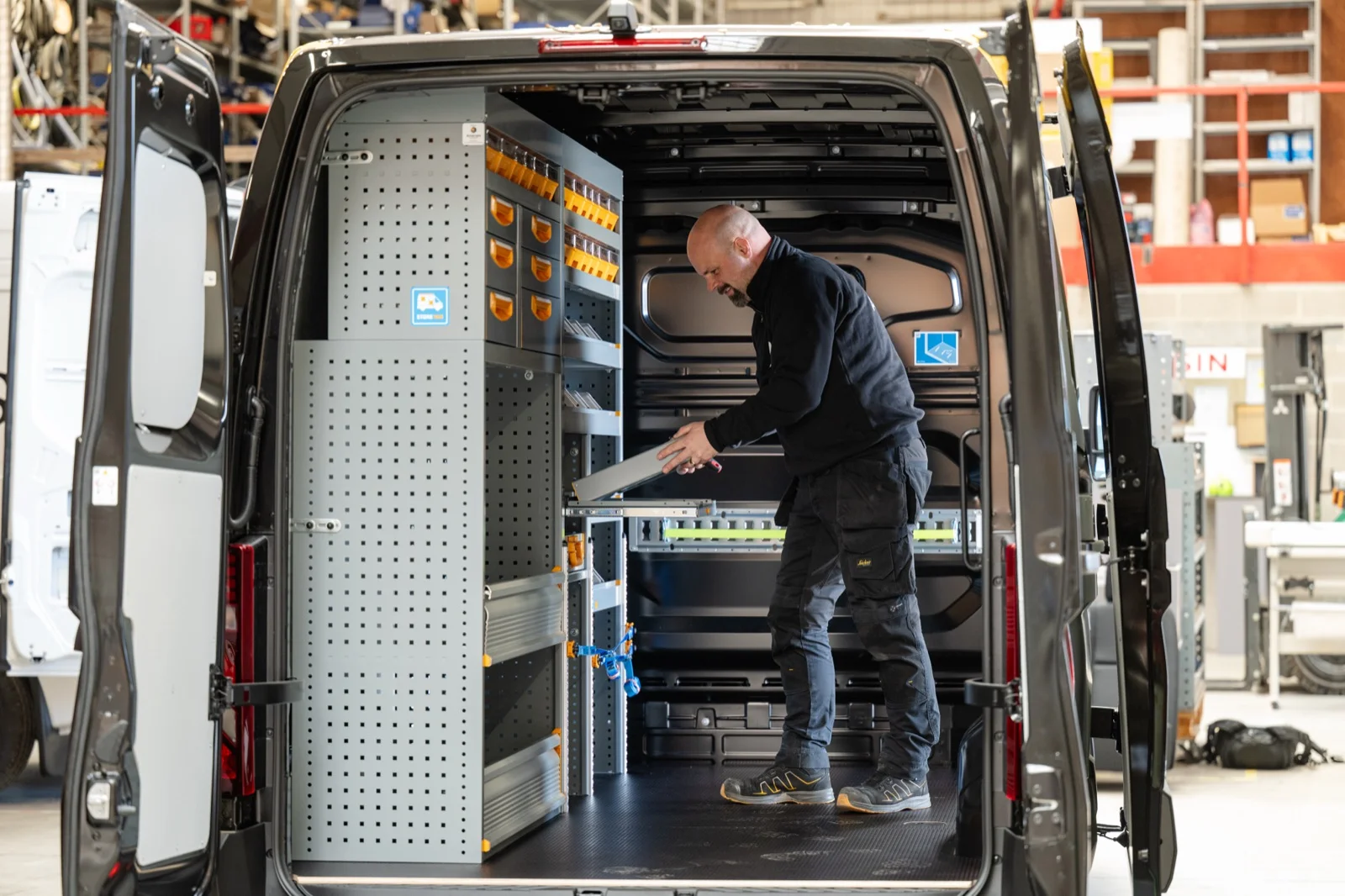
Range: 3 to 6 pages in the first year (one per priority ICP segment), then 2 to 3 a year for maintenance and variations. On Amecam, we shipped 4 landings by typology (craftspeople, food trucks, mobile workshops, work vans) in year one. On Brasero, we run on seasonal pages (weddings, retreats, families) refreshed each quarter. To quantify the lift, the GA4 and conversion tracking layer is what makes these numbers readable.

Platform side: Pletor stays accessible if you extend the engagement, otherwise a static HTML export is delivered at exit. Editorial side: 1 day per quarter of editorial review to keep alignment with your offers and your ads, runnable by a senior internal copywriter. If we leave, you walk out with the Notion doc + account access + quarterly review procedure. No lock-in. The Amecam mission has been running on this model for three years, without us on a day-to-day basis.

Yes. We do this on 35 % of our landing missions. The rule: who steers the editorial writing and who executes the design / dev afterwards. If your agency stays design pilot, we frame the promise, we write the sections, we pass them a structured brief. If we run design internally, we accompany your agency on deployment and CRM connection. We never step on the other agency without saying.

Field note

A landing page is editorial dressed up as design. Brand voice is not a slogan, it is a discipline. A page reads like a page in a book: one word carries the promise, the others extend it or they leave. The right word is worth 30 € of Meta saved on each visitor. At our shop, we write before we draw.

Camille · Voice & content
CamilleVoice & content · HeySquad

Other sub-services CONVERSION

We open your landing pages. We tell you where your promise gets lost between the ad and the form.

Get my landing pages quotedBack to the Conversion service